

Field notes
Republic Launches Investigation After Northern Radar Installation Destroyed
The destruction of the Northern Radar Installation has prompted a widening investigation on Altis, with officials examining possible links to the killing of an AAN news crew in Kavala hours earlier.
Republic Launches Investigation After Northern Radar Installation Destroyed
Meridian News Network (MNN)
April 7, 2025
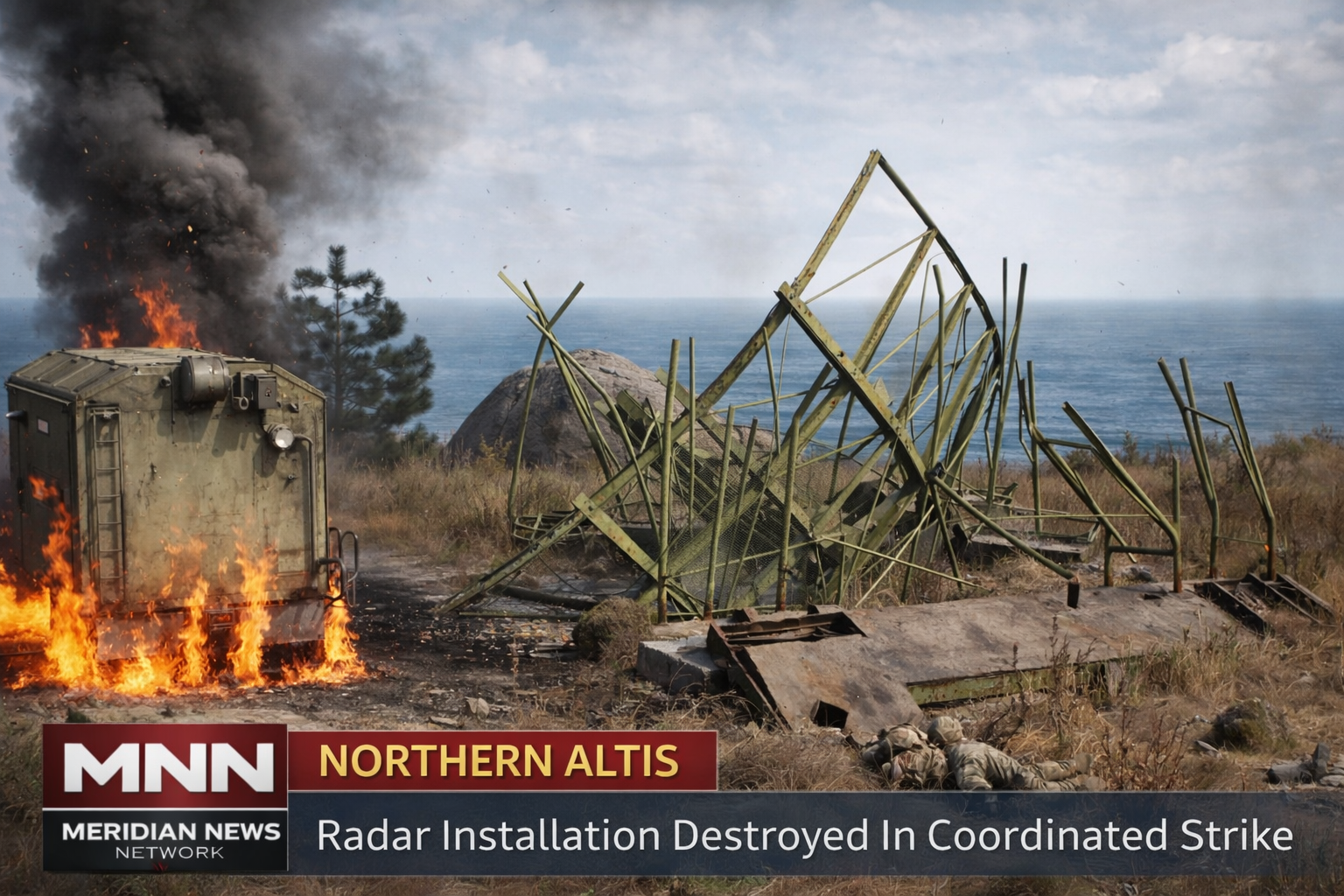
NORTHERN ALTIS - Authorities in the Republic of Altis and Stratis have launched a widening investigation after a coordinated strike destroyed the Northern Radar Installation on Sunday, in what officials are treating as one of the most serious security breaches of the Poseidon Crisis so far.
Government and military officials had not released a full public reconstruction of the incident by late April 6, but preliminary reporting indicates that explosives were used against the site after attackers reached the position and a direct engagement followed.
The strike has drawn immediate scrutiny not only because of the target itself, but because investigators are now examining whether the operation was linked to the killing of an AAN news crew in Kavala only hours earlier.
Link to Kavala Under Review
That crew was found dead late Saturday night, with its press van and equipment missing from the scene. At the time, the killings were widely viewed as another grim but isolated act of violence in a city already strained by unrest, the Altian Economic Crisis, and growing activity linked to the Altian Opposition Networks.
By Sunday afternoon, however, that assumption was coming under increased scrutiny.
Security officials are now reviewing whether a vehicle matching the description of the missing AAN van was used in the approach to the radar site under the appearance of a legitimate media visit. Authorities have not publicly confirmed that link, but multiple officials familiar with the early investigation described the overlap as a central line of inquiry.
If established, the connection would suggest that the killings in Kavala and the strike in northern Altis were not separate incidents, but parts of the same planned operation.
Casualties Confirmed, Names Withheld
AAF officials confirmed that government personnel were killed and wounded during the attack, but said names and a full casualty breakdown would not yet be released pending notification of next of kin.
Opposition-linked channels have circulated significantly higher claims about AAF losses than anything authorities have so far acknowledged, but those figures could not be independently verified and are widely viewed by analysts as likely inflated.
Authorities also said five suspected opposition fighters were found at or near the site following the strike. Three were confirmed dead. One was described as critically wounded and not expected to survive, while another remained in critical but stable condition and was being questioned by security personnel.
Officials have not publicly identified the wounded detainee or released details on what information, if any, had been obtained by Sunday evening.
A Sensitive Military Target
The Northern Radar Installation is one of the AAF’s key surveillance positions in northern Altis, where it contributes to monitoring the island’s northern approaches and supporting wider situational awareness.
Its loss is expected to carry both tactical and political consequences.
Military analysts say a strike on a radar site of this kind matters not only because of the equipment destroyed, but because it signals that attackers were able to reach and hit a sensitive state position at a time when confidence in public authority is already under strain.
That strain has been building for months. Recent unrest in Kavala and the longer fallout from the Poseidon Reserve discovery have helped turn Altis into a state under simultaneous economic, political, and security pressure.
Security Questions Intensify
The circumstances of the strike are now likely to raise difficult questions for both the government and the AAF.
Investigators are expected to focus on how the attackers reached the site, whether the approach involved prior access arrangements or procedural failures, and whether additional military or infrastructure targets may be at risk.
Officials have not yet assigned formal public responsibility for the attack. Even so, the incident is widely expected to sharpen concern over the capabilities of armed anti-government elements operating inside the Republic.
For months, authorities have faced signs that instability on Altis was deepening. What happened at the radar site now suggests that parts of that broader crisis may be evolving into a more organized and more dangerous form of confrontation.
A Crisis Entering a New Phase
In immediate operational terms, the priority is likely to remain on securing the area, identifying the dead and wounded, and determining whether the Kavala killings and the radar strike were part of a single chain of events.
In political terms, the implications may be wider.
An attack that destroys military infrastructure does more than expose a security lapse. It also sends a public signal that the Poseidon Crisis may be moving beyond unrest and into a more openly armed phase.
Earlier reporting on the Kavala crew killings and the growing unrest on Altis now appears increasingly relevant as investigators work to understand what happened on April 6 and what may come next.
Related coverage
Follow the wider story
Move from the report to the linked operation and adjacent reporting to keep the Poseidon Crisis thread connected.
AAN News Crew Killed in Kavala as Van and Equipment Vanish
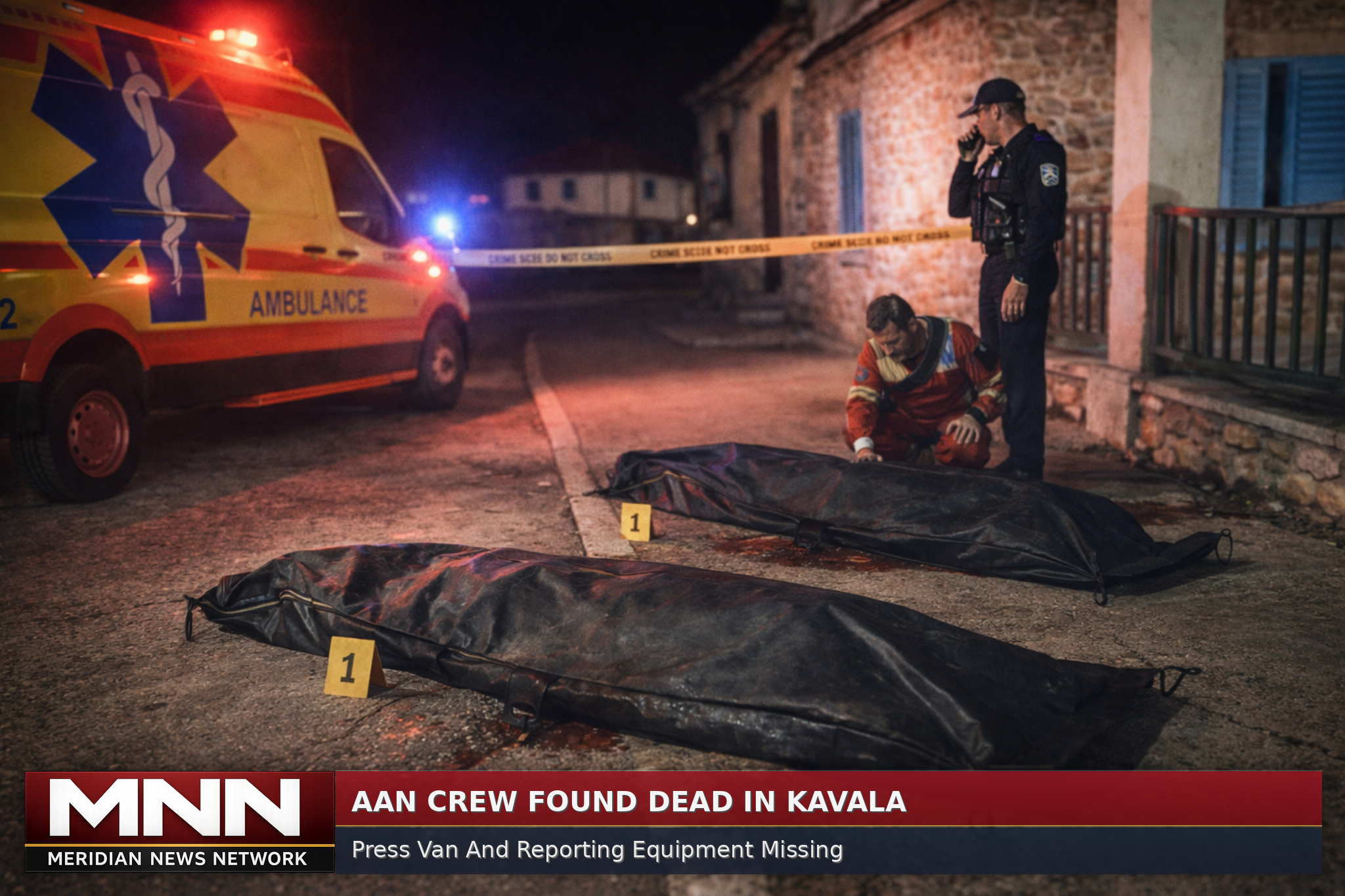
An Altis Action Network crew was found murdered in Kavala on April 5, 2025, with their van and reporting equipment missing and no immediate leads for investigators.
Fresh Kavala Protests Signal Deepening Crisis on Altis
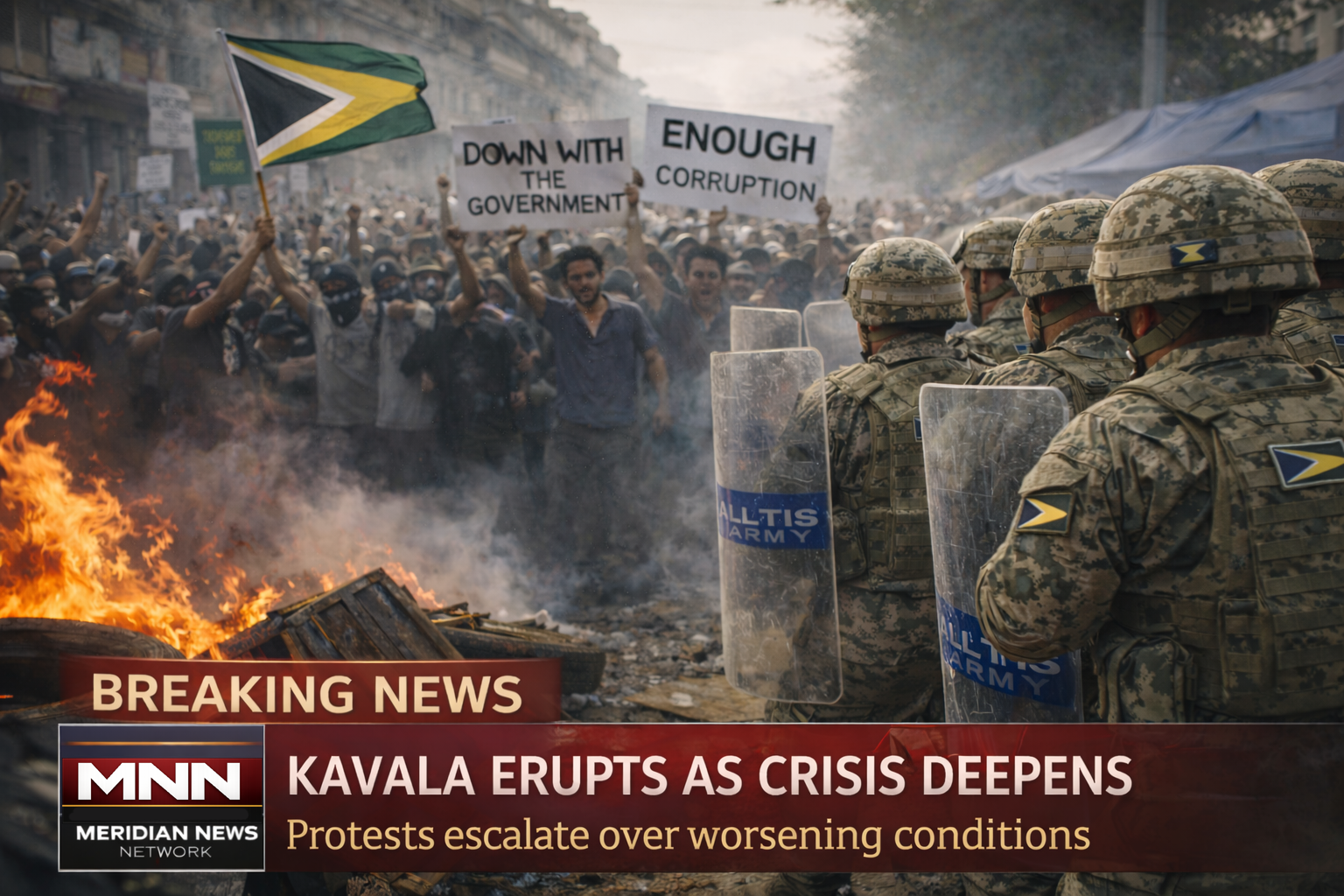
A new wave of demonstrations in Kavala underscores the continuing economic breakdown on Altis, with some marchers now appearing armed as local coverage intensifies.
Major Gas Discovery Near Altis Signals New Era
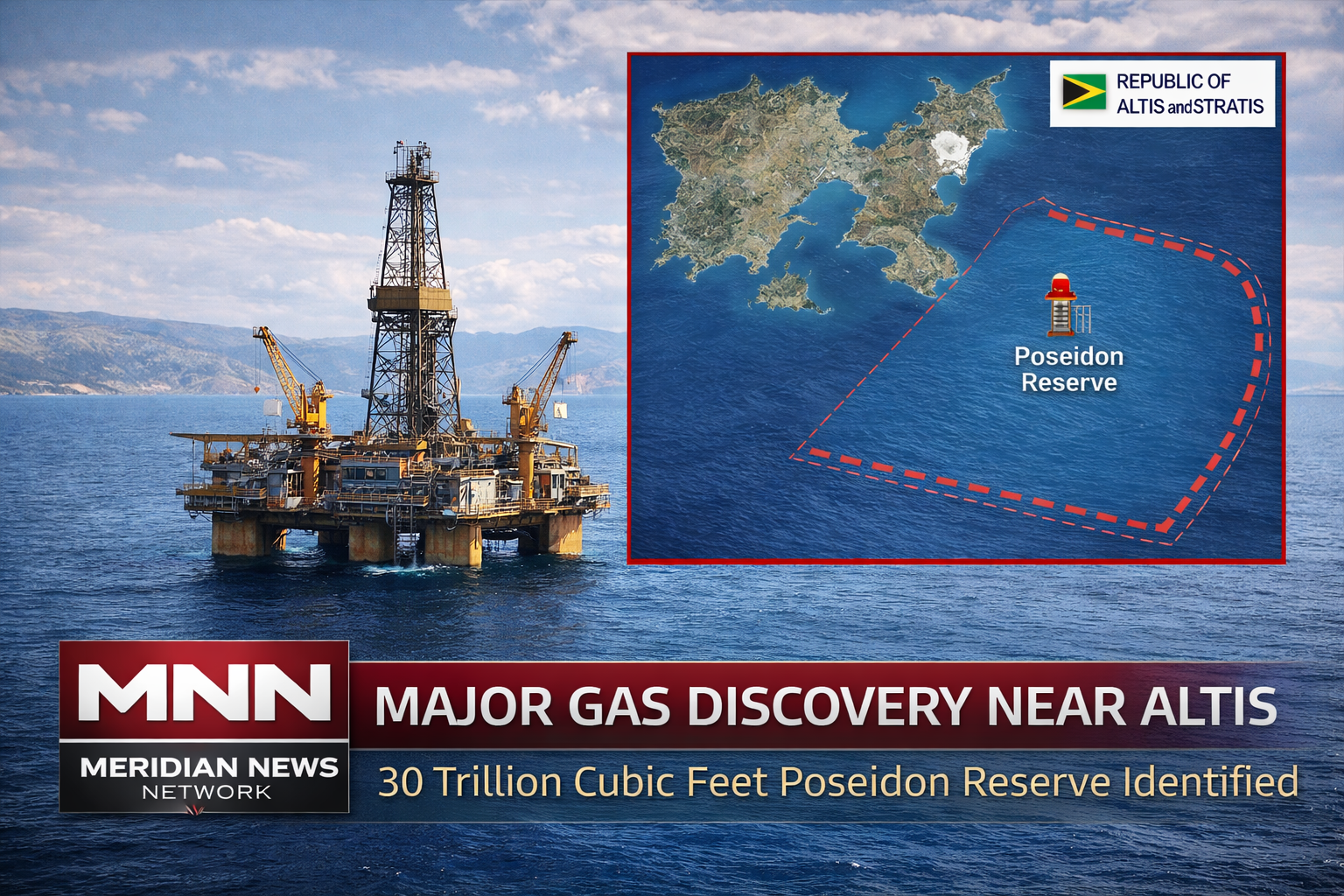
The discovery of the Poseidon Reserve positions Altis and Stratis as a major emerging energy player in the eastern Mediterranean.