

Field notes
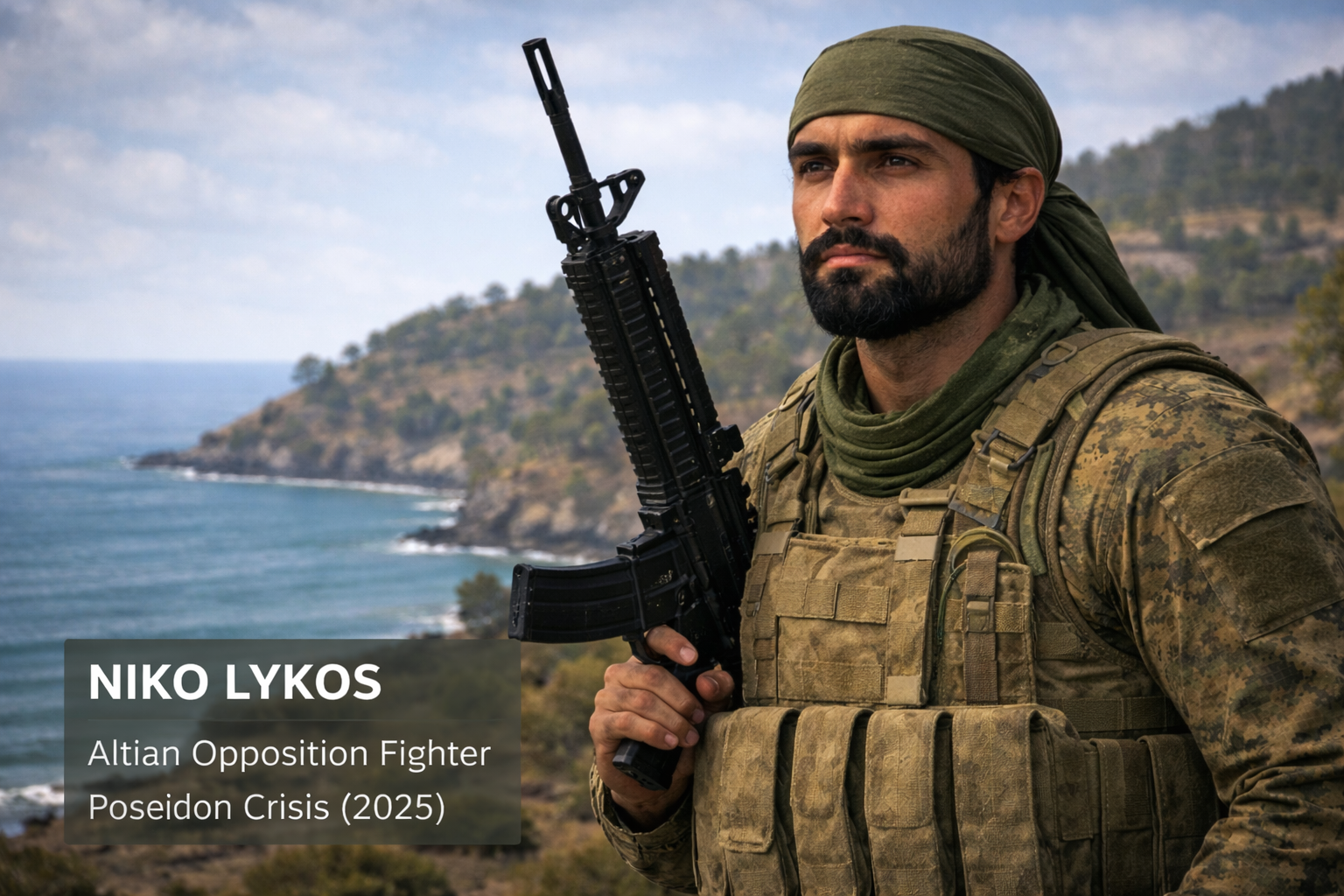
Niko Lykos
Leader of Sigma Team, a hardline opposition commander operating in northeastern Altis and a key local intermediary in the foreign-backed escalation of the Poseidon Crisis.
Overview
Niko Lykos is the field leader of Sigma Team, an armed opposition unit based at Camp Sigma in the northeastern region of Altis during the early stages of the Poseidon Crisis. Within the broader Altian Opposition Networks, Lykos is associated with a more disciplined and uncompromising style of leadership than many of the island’s other cell commanders.
Where some opposition figures are driven primarily by anger at the government or by economic desperation, Lykos is regarded as a commander focused on structure, control, and results. His influence over Sigma Team gave the group a reputation for cohesion and operational seriousness that set it apart from many less organized anti-government formations.
Background
Publicly available information about Lykos is limited, and much of what is known comes from fragmentary reporting and later security assessments. He is understood to have emerged from the instability that followed the worsening Altian Economic Crisis, when local anger, state pressure, and shrinking opportunities pushed more experienced and determined individuals toward organized resistance.
Unlike fighters such as Andreas Markakis, Lykos is not primarily associated with a military background. He appears to have risen from the local opposition environment itself, building influence through organization, personal authority, and his ability to impose order on people who were angry, armed, and often poorly coordinated.
Rather than drawing legitimacy from formal service, Lykos established himself as the kind of figure who could turn frustration into action. His preference for chain of command, internal discipline, and selective use of force made him an effective organizer within a movement that otherwise lacked consistent leadership. Over time, that authority extended beyond planning and recruitment into direct battlefield leadership.
Sigma Team
Sigma Team operated from Camp Sigma in northeastern Altis and became known as one of the more structured small units within the broader opposition landscape. Under Lykos, the group maintained tighter internal control than most cells and placed strong emphasis on readiness, secrecy, and obedience.
This approach attracted members who were frustrated not only with the government, but also with the disorder and uncertainty inside the wider resistance environment. For some, Sigma Team offered purpose and direction. For others, it represented a more dangerous turn in the evolution of the opposition.
The unit also developed a reputation for well-prepared ambushes and tightly controlled attacks, reinforcing the view that it was more dangerous than the average local cell. Under Lykos, violence was treated less as spontaneous retaliation and more as a planned instrument. He was known not only for directing missions, but for leading fighters in the field during key actions.
Among those associated with the group were Andreas Markakis, Lukas Rigas, and medic Dorian Leventis, who served within the unit during the early crisis period. Markakis is generally understood to have respected Lykos as a capable and decisive leader, while the presence of men such as Rigas and Leventis shows how the team combined mixed backgrounds under a single harder internal culture. That contrast helps illustrate the uneven character of the opposition movement on Altis.
Although Sigma appears to have fielded more men during the radar operation itself, the surviving remnant that emerges afterward is built around those four. Markakis brings prior military experience, Rigas adds security-sector familiarity with weapons and protective work, and Leventis provides the medical support that makes a reduced armed element more durable than its size would suggest. Those relationships are part of why Sigma reads less like a loose local mob and more like an organized field team even after taking severe losses.
Leadership Style
Lykos is most often characterized as controlled, severe, and highly demanding of the people under him. He is associated with a belief that the opposition could not survive as a loose protest movement and would instead need discipline, internal unity, and a willingness to escalate if it hoped to defeat state pressure.
This perspective placed him on the harder edge of the anti-government movement. While not all opposition figures shared his methods or priorities, commanders such as Lykos gained influence as unrest increasingly shifted toward organized armed conflict. His presence on operations helped reinforce his authority, since he was seen as a leader willing to share the risks he imposed on others.
Role in the Poseidon Crisis
As the crisis deepened, units like Sigma Team became more significant because they were capable of acting with greater coordination than the broader opposition networks from which they emerged. Lykos’s role in that transition was not simply tactical. He represented a type of local commander who helped convert diffuse unrest into a more militarized struggle while personally leading missions that tested and hardened his unit.
His presence in northeastern Altis also made Sigma Team relevant to the security picture beyond its immediate size. Well-led regional cells could influence transport routes, local loyalties, and the pace at which instability spread into wider confrontation with the Republic of Altis and Stratis.
What later becomes clear is that Lykos was not simply one more local commander responding to collapse. He was also one of the figures most willing to work in alignment with the strategic design of Arda Aydin, accepting outside support and pursuing goals that extended beyond immediate local resistance.
Reputation
Within opposition circles, Lykos developed a reputation for competence and resolve. Supporters viewed him as the kind of leader willing to impose order on a fragmented movement and to do what weaker figures would avoid. Critics, however, regarded him as a warning sign that parts of the opposition were drifting toward harsher methods and more rigid leadership models.
That reputation makes Lykos significant beyond his immediate battlefield role. In the history of the Poseidon-era unrest, he stands as an example of how certain local commanders gained power by presenting certainty, discipline, and force as the only answer to national collapse.
Role in the Northern Radar Attack
Lykos played a central role in the April 6, 2025 attack on the Northern Radar Installation, both as field leader and as the figure most comfortable with the deception at the heart of the operation. During the approach, he coaches Andreas Markakis on how to behave like a journalist rather than a soldier, handles key conversation at the checkpoint, and shows greater confidence than Markakis in the arrangements attributed to The Turk.
The raid also illustrates how Lykos differs from less disciplined or less ruthless opposition figures. He treats the use of the stolen press van, the manipulation of a scheduled media visit, and even the destruction of evidence as practical parts of the mission rather than moral thresholds. His decision-making reflects a commander who sees deception and controlled brutality as necessary tools in a widening conflict.
At the same time, Lykos is not portrayed as a distant planner. He remains present throughout the assault, directs men in contact, coordinates the hold around the objective, and helps keep the surviving fighters organized during the escape. That combination of field presence, composure, and hardline pragmatism helps explain why Sigma Team became one of the more dangerous small units inside the broader opposition movement.
Role in the Molos Diversion
Lykos’s importance grows further during the April 13, 2025 operation around Molos. In that episode, he sends Andreas Markakis to destroy transformers supplying both the town and Molos Airfield, then orders Sigma Team to make itself visible and hold in a safe house so that police and AAF personnel continue concentrating on the town rather than the airfield. The plan shows a willingness not merely to strike and withdraw, but to deliberately shape the enemy’s response.
This operation is significant because it exposes how fully Lykos had aligned himself with a broader foreign-backed strategy. He does not treat the arrival of Arda Aydin or Turkish forces as an unwelcome intrusion into Altian affairs. Instead, he presents it as the first real assertion of power on an island abandoned by its own government. That openly supportive posture marks an important shift in his character. Lykos is no longer only a severe local commander making use of outside help. He is acting as a willing local partner in a larger interventionist design.
Creator Notes
- Face: Mavros
- Subtitle color: Deep Crimson (#B33A48)
Related reporting
Read the wider story around this reference page
These linked reports and operations connect this reference page to the campaign developments and episodes where the story moves.
Fresh Kavala Protests Signal Deepening Crisis on Altis
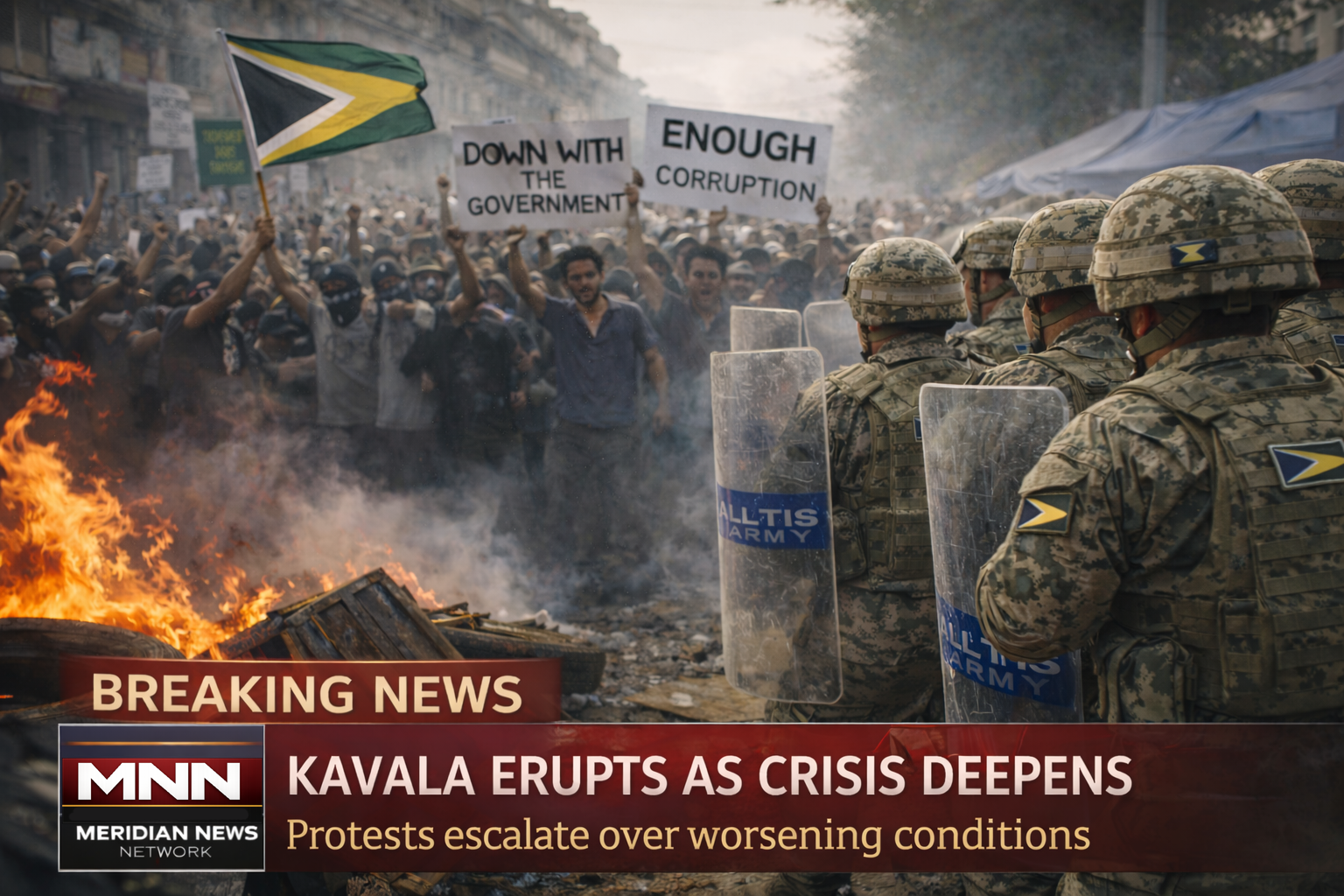
A new wave of demonstrations in Kavala underscores the continuing economic breakdown on Altis, with some marchers now appearing armed as local coverage intensifies.
The First Strike on Altis | Poseidon Crisis Ep. 2
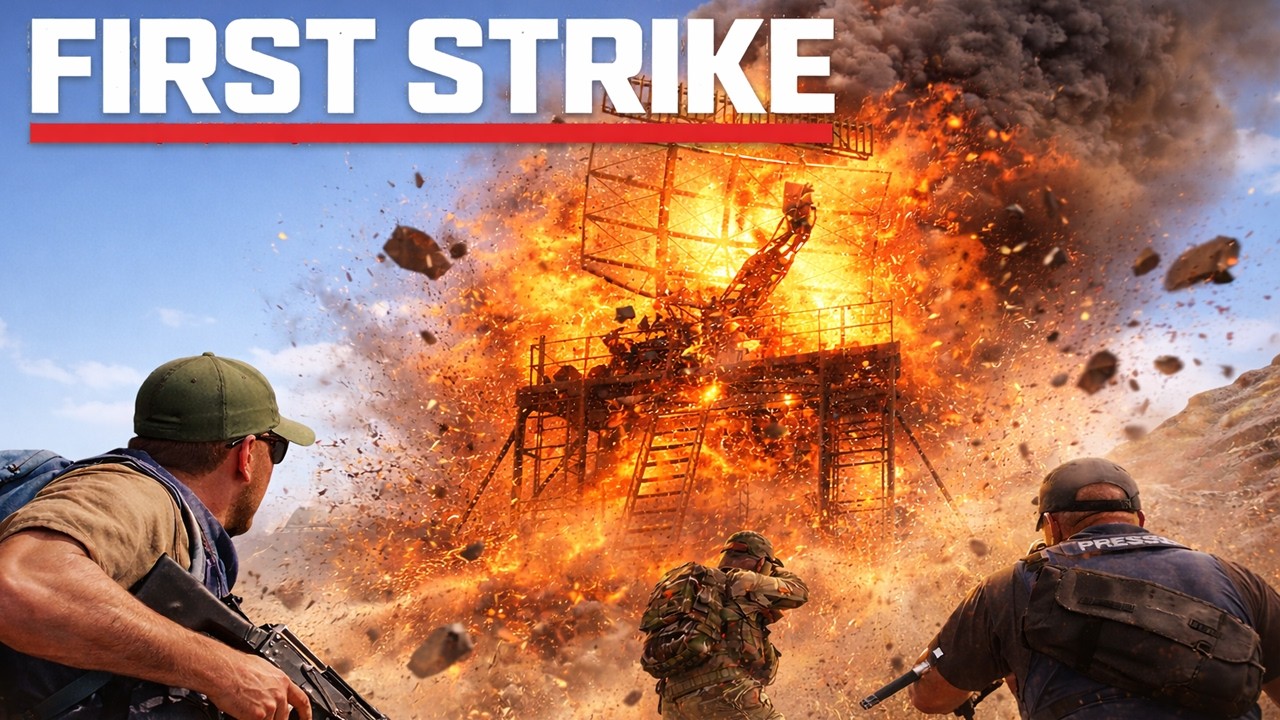
A stolen AAN press van carries an opposition strike team through an AAF checkpoint and into the attack that destroys the Northern Radar Installation.
The Day Altis Changed | Poseidon Crisis Ep. 4

A sabotage mission in Molos draws AAF forces away from the real objective and reveals that the Poseidon Crisis has crossed into open foreign intervention.