

Field notes
Turkish Landing on Altis
The April 13, 2025 Turkish landing on Altis that transformed the Poseidon Crisis from covert destabilization into open foreign intervention.
Overview
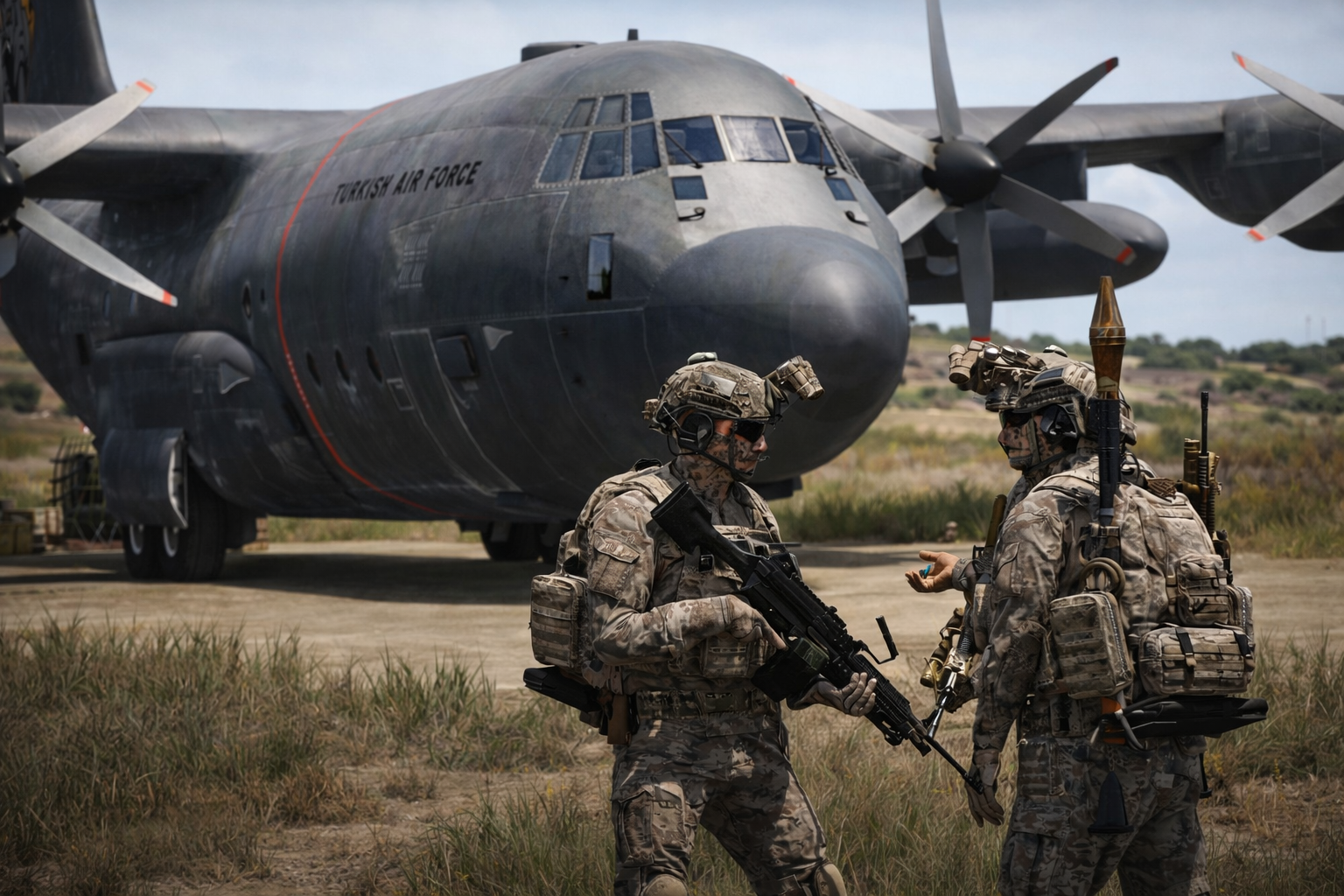
The Turkish Landing on Altis was the April 13, 2025 operation in which Turkish forces established an open military presence on Altis and secured Molos Airfield as a forward foothold. It is widely treated as one of the decisive turning points of The Poseidon Crisis, because it marked the moment the conflict moved beyond covert interference, armed opposition activity, and internal instability into direct foreign intervention.
Until that point, Turkish influence on the island had largely been understood through indirect signs: rumors of outside backing, the growing role of The Turk, and increasingly capable anti-government operations tied to the Altian Opposition Networks. The landing changed that immediately. Turkish power was no longer hidden behind local intermediaries. It was present on the ground, in uniform, and tied to control of one of the island’s key military sites.
The Operation
The landing unfolded in parallel with the wider Molos operation seen on the same day. While Sigma Team carried out sabotage in town and drew police and AAF attention away from the airfield, Turkish forces moved into Molos Airfield and secured it as a functioning entry point, logistics hub, and command position.
That structure was important. The diversion in Molos was not the main event by itself. It helped shape the conditions under which Turkish forces could arrive, consolidate, and present the Republic with a fait accompli before a coherent response could be organized. The operation therefore combined local insurgent action, deception, and conventional military movement into one coordinated event.
Why the Landing Succeeded
Several factors appear to have helped the landing succeed. The Altis Armed Forces were already under strain following the Destruction of the Northern Radar Installation and the subsequent sweep operations in northwestern Altis. Those actions had pulled attention, manpower, and urgency toward a different part of the island.
Later analysis also suggested that the destruction of the radar installation may have degraded northern surveillance at exactly the wrong time. If that interpretation is correct, then the earlier April 6 attack was not only an escalation in its own right, but a preparatory blow that reduced warning time for the Turkish-linked operation that followed a week later.
Forces Involved
On the Turkish side, the landing is closely associated with Brigadier General Arda Aydin, whose identity as the figure previously known as The Turk was openly confirmed during the Molos operation. Turkish transport aircraft, escorted fighter coverage, and ground personnel linked the event unmistakably to the Turkish state rather than to deniable covert support alone.
On the Altian side, the event exposed the strategic vulnerability of the Republic of Altis and Stratis and the limits of what the AAF could respond to quickly once surprise had been achieved. Commanders such as Colonel Konstantinos Drakos were left trying to determine whether the landing represented a temporary coercive move, a larger occupation effort, or the opening step in a broader campaign.
Why It Mattered
The landing mattered because it changed the character of the crisis all at once. Before April 13, the Republic could still argue that it was confronting a domestic emergency sharpened by covert outside meddling. After the landing, that framing no longer held. Turkish soldiers were now on Altian soil, operating from a captured airfield, and shaping events directly.
That transformed the political meaning of every subsequent action. Questions of unrest, insurgency, and public order were now inseparable from sovereignty, foreign military presence, and the future control of the Poseidon Reserve. In effect, the Turkish landing turned the crisis from a dangerous internal conflict into an open geopolitical confrontation.
Place in the Poseidon Crisis
In the broader history of the campaign, the Turkish Landing on Altis stands alongside the Destruction of the Northern Radar Installation as one of the most important escalation points in the early crisis. The radar raid showed that the state could be struck by organized armed actors. The landing showed that foreign powers were now prepared to move openly to shape the outcome of the conflict.
That is why the event remains so significant in the setting. It is not simply the moment Turkish troops arrived. It is the moment the entire struggle over Altis widened into something far more dangerous than internal unrest alone.
Immediate Aftermath
What followed the landing later that same day clarified its meaning even further. Colonel Konstantinos Drakos, still trying to determine whether Turkey’s move represented armed pressure or the start of a larger offensive, attended a requested meeting tied to Brigadier General Arda Aydin. He was killed after refusing Turkish demands to submit to custody and travel under Turkish escort.
The killing of Drakos was quickly followed by a coordinated Turkish assault on a nearby AAF position. That sequence matters because it showed the landing was not an isolated seizure intended only to create leverage at the negotiating table. It was the opening move in a broader military effort already prepared to expand the fighting the moment the last space for negotiation disappeared.
For that reason, the Turkish Landing on Altis is best understood not just as an arrival event, but as the beginning of the first open phase of war between the Republic of Altis and Stratis and Turkish forces on the island.
The next two days also showed that the landing did not produce an immediate and uncontested breakout. Turkish forces remained constrained near Sophia by a narrow logistical entry point, the losses already suffered in the initial fighting, and persistent AAF artillery pressure. That temporary slowdown matters because it reveals the landing as the beginning of a campaign rather than the instant resolution of one.
By April 16, 2025, however, opposition actions were already being used to change that situation. An ambush on an AAF convoy believed to be moving more artillery, followed by the disabling of a nearby gun position, helped reduce some of the pressure that had been holding the Turkish advance back. In that sense, the aftermath of the landing is important not only for the fact of Turkish arrival, but for how quickly the wider battlefield began reorganizing around the question of whether Ankara could turn a foothold at Molos into sustained movement inland.
Related reporting
Read the wider story around this reference page
These linked reports and operations connect this reference page to the campaign developments and episodes where the story moves.
Flights Continue Into Molos as Turkish Position Grows
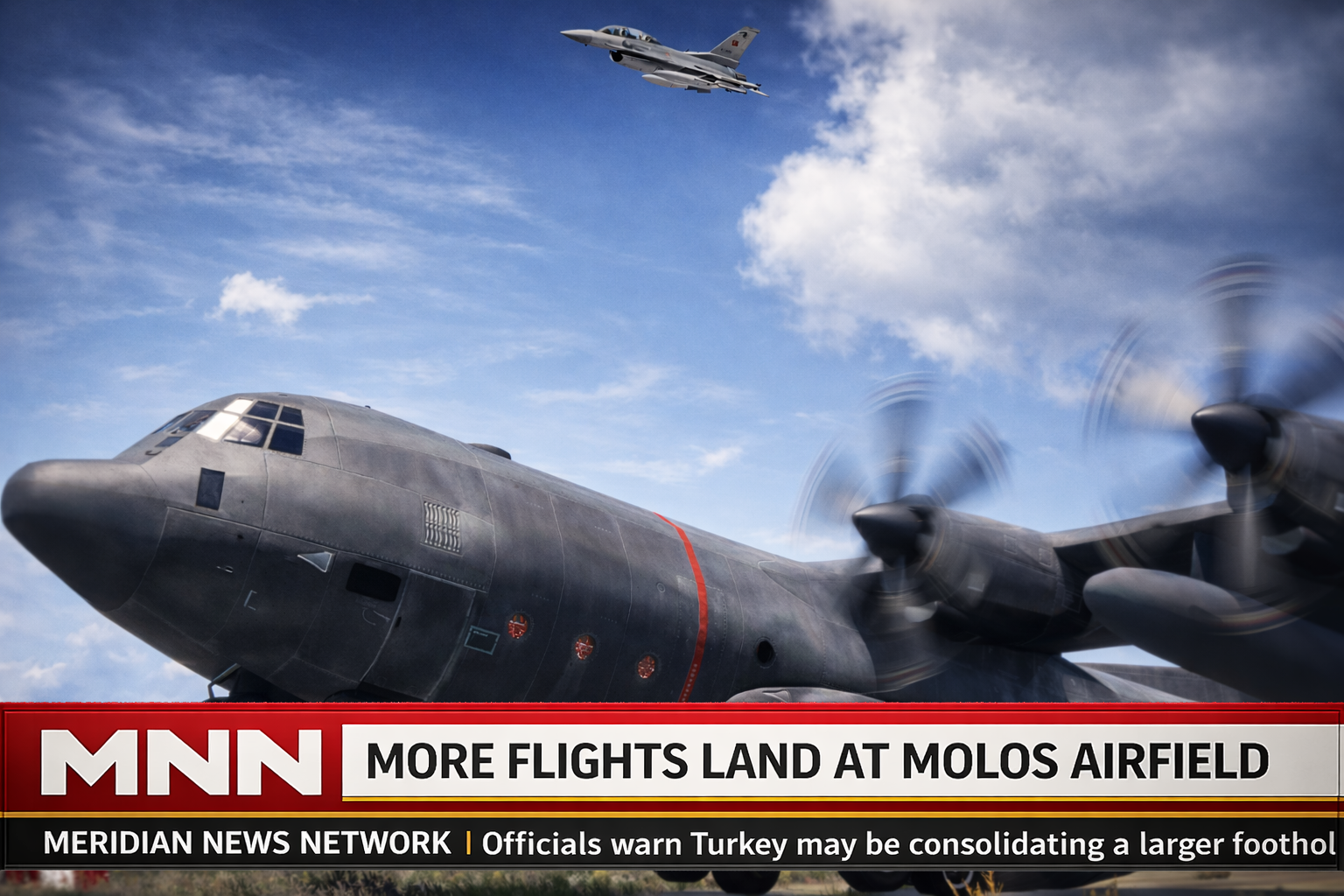
Repeated transport flights into Molos Airfield are fueling fears that Turkey is reinforcing for a larger operation rather than holding a limited position.
Turkey Warns Altis Instability Puts Poseidon Reserve at Risk
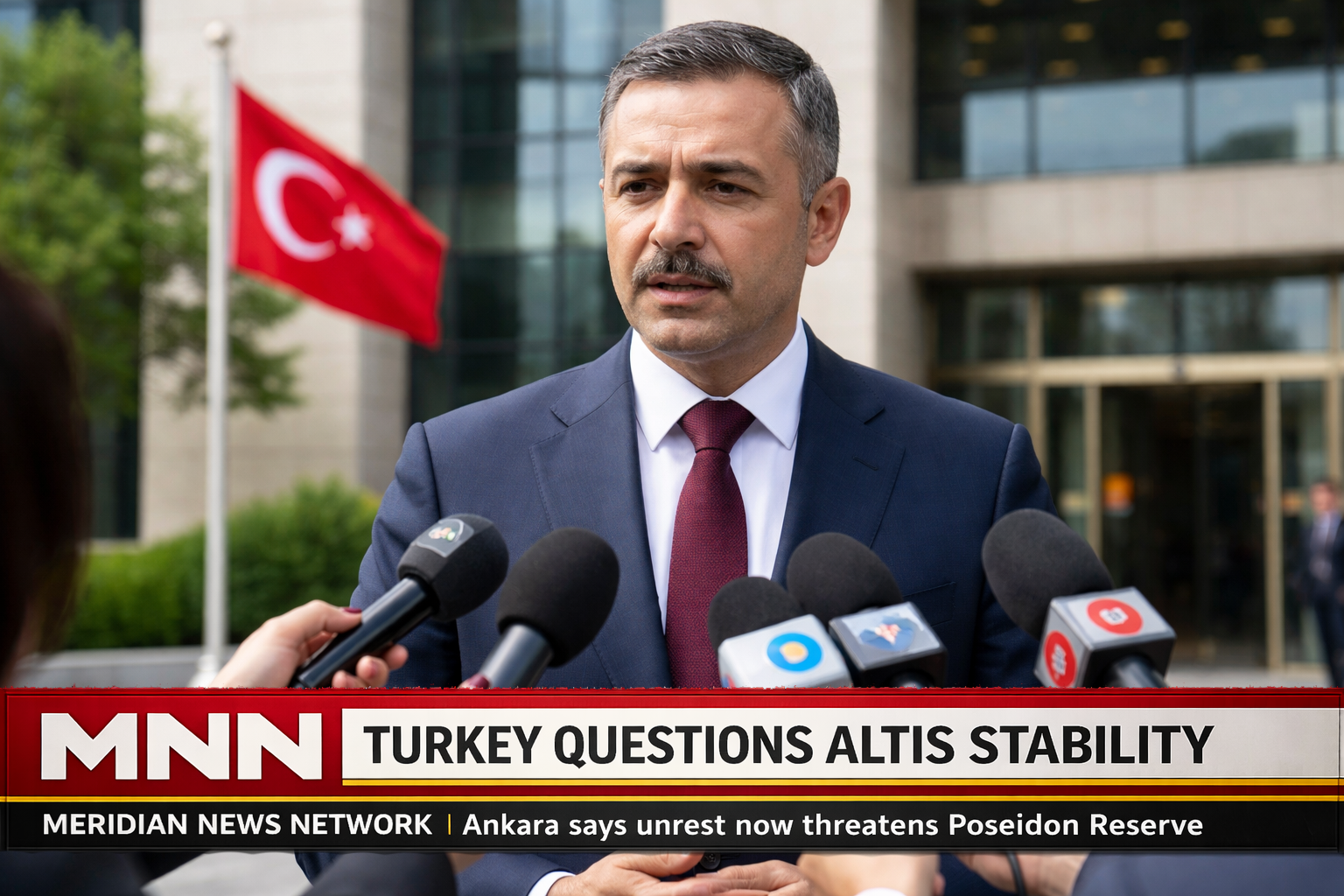
Turkish officials say worsening disorder on Altis now threatens regional energy security and the safety of critical infrastructure tied to the Poseidon Reserve.
Republic Denounces Turkish Presence at Molos Airfield
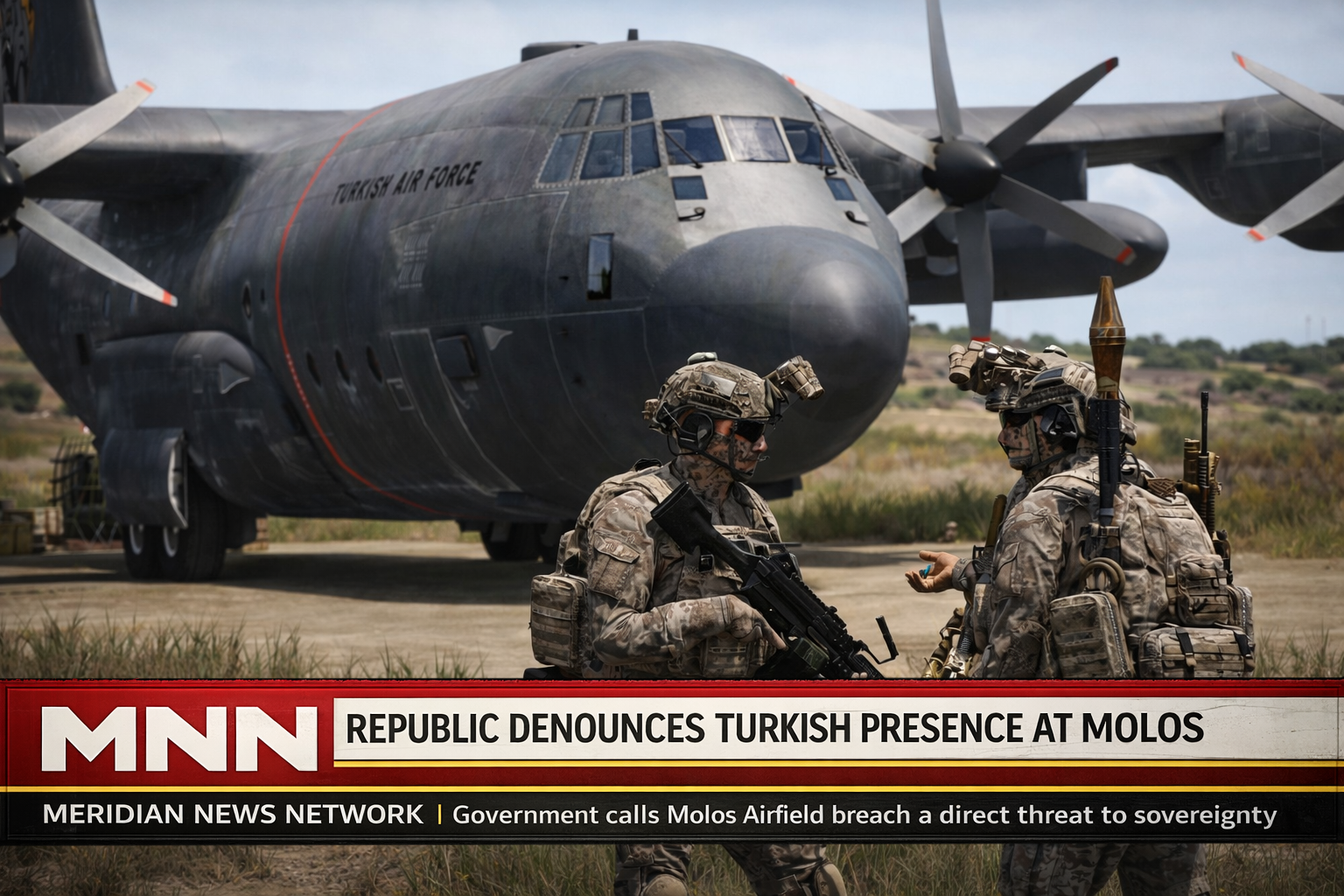
The government of Altis and Stratis says Turkish forces have established an unlawful position at Molos Airfield, marking the clearest rupture yet between covert pressure and open intervention.