

Field notes
Destruction of the Northern Radar Installation
The April 6, 2025 raid that destroyed an AAF radar site in northern Altis and marked a major escalation in the Poseidon Crisis.
Overview
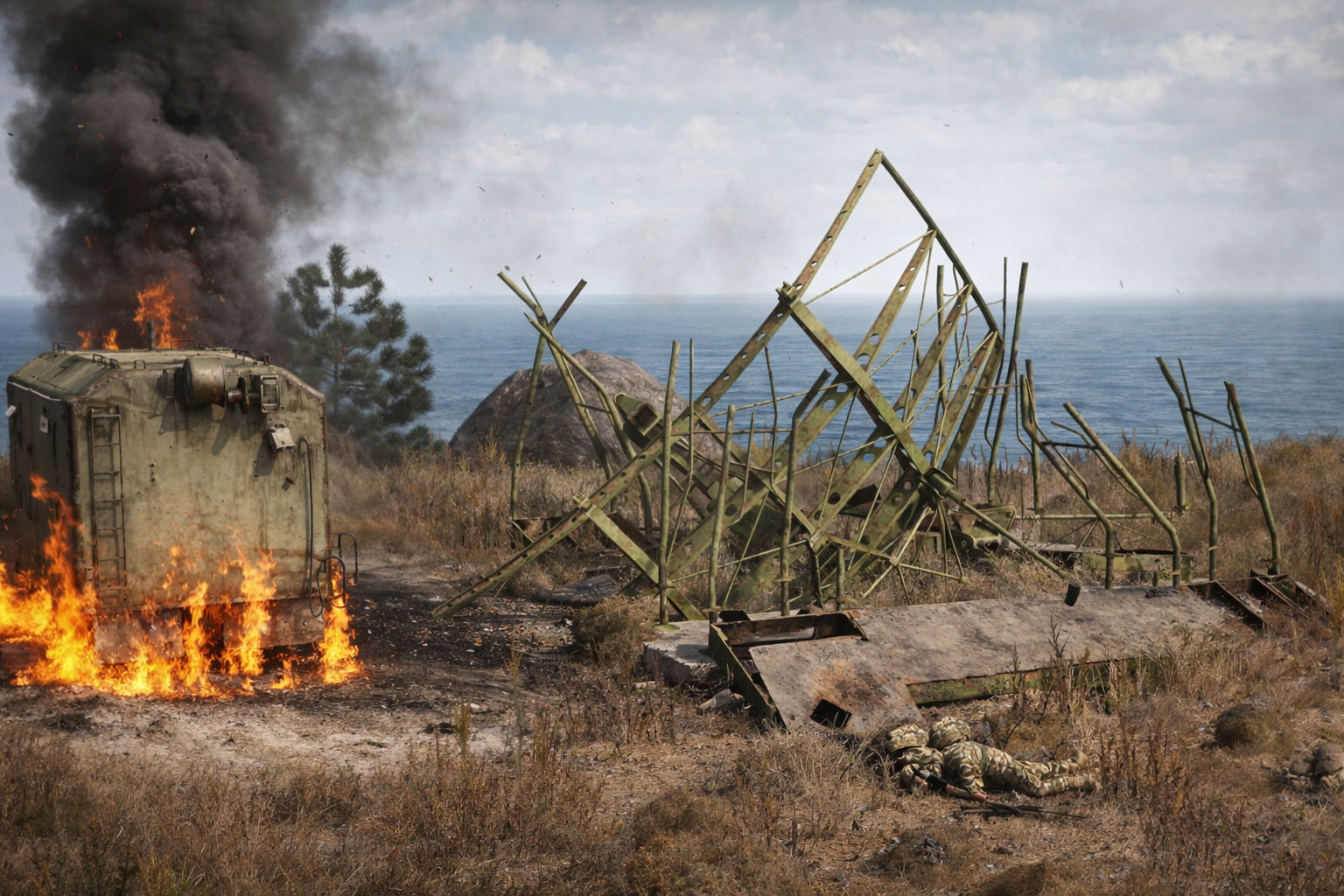
The Destruction of the Northern Radar Installation was a major opposition attack carried out on April 6, 2025 against the Northern Radar Installation in northern Altis. It is widely regarded as one of the first major overt armed actions of The Poseidon Crisis.
The raid was significant not only because it destroyed an important AAF surveillance asset, but because it demonstrated a level of planning, deception, and operational discipline that suggested at least some anti-government elements had moved beyond spontaneous unrest into coordinated insurgent activity. Immediate public reaction and the state’s early interpretation are reflected in MNN reporting on the radar strike investigation.
The Attack
According to later reconstruction, the assault force approached the site using a stolen AAN press van tied to the killing of a news crew in Kavala the night before. Through arrangements attributed to The Turk, an AAN media visit had already been expected at the site, allowing the attackers to exploit a pre-cleared access window and reach the approach to the radar position before the deception began to collapse.
Once challenged over credentials, the strike team initiated the assault. Security personnel and vehicles near the access route were engaged first, after which the attackers pushed uphill toward the radar site itself. Demolition charges were then planted on the installation, resulting in the destruction of the radar position.
Forces Involved
The raid is associated with the Altian Opposition Networks, with later character evidence tying the attacking element to Sigma Team under Niko Lykos. Later reconstruction suggests that Sigma committed a larger nine-man strike element to the attack. Five fighters were left at or near the site, while the four survivors most closely associated with the unit afterward were Niko Lykos, Andreas Markakis, Lukas Rigas, and medic Dorian Leventis.
On the government side, the destruction of the site underscored the vulnerability of AAF infrastructure and the growing burden placed on units such as 2nd Squad, 3rd Platoon and the wider force structure above them as the island’s security picture worsened.
Why It Mattered
The destruction of the radar was tactically important because it degraded surveillance coverage in northern Altis and showed that critical state infrastructure could be hit by relatively small but disciplined armed elements. The attack also carried political consequences far beyond the site itself.
Later analysis gave the strike an additional layer of significance. By eliminating one of the Republic’s key northern surveillance nodes, the raid may also have created a blind spot that reduced warning time for movements tied to the Turkish seizure of Molos Airfield on April 13, 2025. In that reading, the radar attack was not only an early escalation in its own right, but also part of the operational preparation for the wider foreign intervention that followed days later.
Before the strike, many incidents could still be framed as scattered sabotage, civil disorder, or isolated anti-government violence. After the radar was destroyed, that interpretation became much harder to sustain. The event made it clearer that parts of the opposition were becoming capable of deliberate military action against state targets.
Place in the Poseidon Crisis
In the broader history of the conflict, the Destruction of the Northern Radar Installation is often treated as one of the clearest early markers of transition from instability to insurgency. It showed that the crisis had entered a more dangerous phase in which deception, sabotage, and organized armed raids were converging into a coherent threat.
That is why the event remains so important in the setting. It was not only an attack on a radar site. It was a public demonstration that the conflict on Altis was becoming structured, armed, and much harder for the state to contain.
Immediate Aftermath
The raid placed the Republic of Altis and Stratis under immediate pressure to respond. In the days that followed, the AAF began sweep operations in northwestern Altis, where officials believed elements of the Altian Opposition Networks were attempting to establish or preserve safe havens in the western highlands. One of the earliest of these actions was the northwestern Altis sweep on April 9, 2025.
Those operations were launched with limited intelligence and strong political urgency. Early contact in the region showed that the radar attack had not been a singular anomaly but part of a wider escalation in which opposition fighters were proving more organized, better armed, and more difficult to dislodge than the state had publicly implied.
Related reporting
Read the wider story around this reference page
These linked reports and operations connect this reference page to the campaign developments and episodes where the story moves.
Republic Launches Investigation After Northern Radar Installation Destroyed
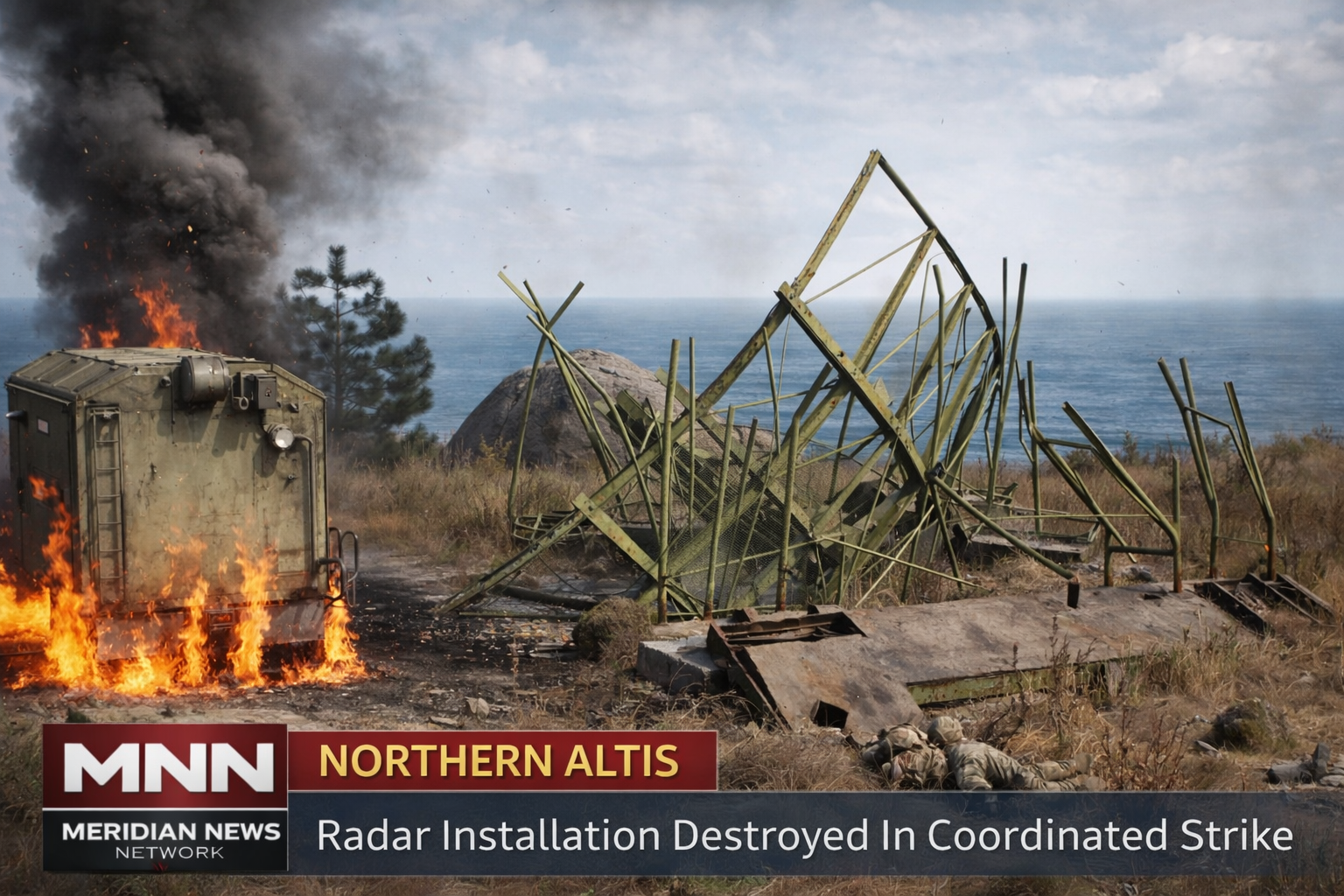
The destruction of the Northern Radar Installation has prompted a widening investigation on Altis, with officials examining possible links to the killing of an AAN news crew in Kavala hours earlier.
AAN News Crew Killed in Kavala as Van and Equipment Vanish
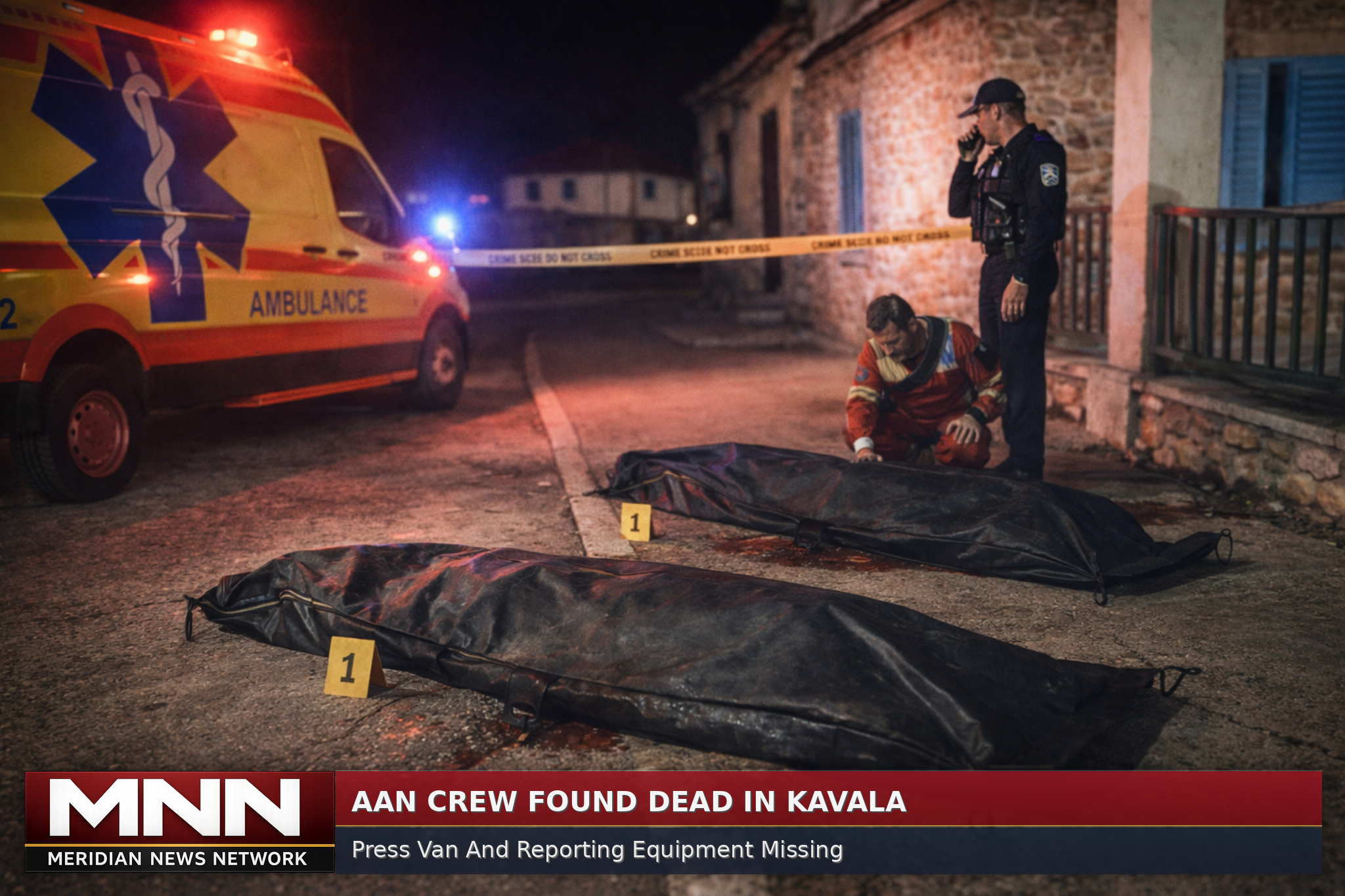
An Altis Action Network crew was found murdered in Kavala on April 5, 2025, with their van and reporting equipment missing and no immediate leads for investigators.
Fresh Kavala Protests Signal Deepening Crisis on Altis
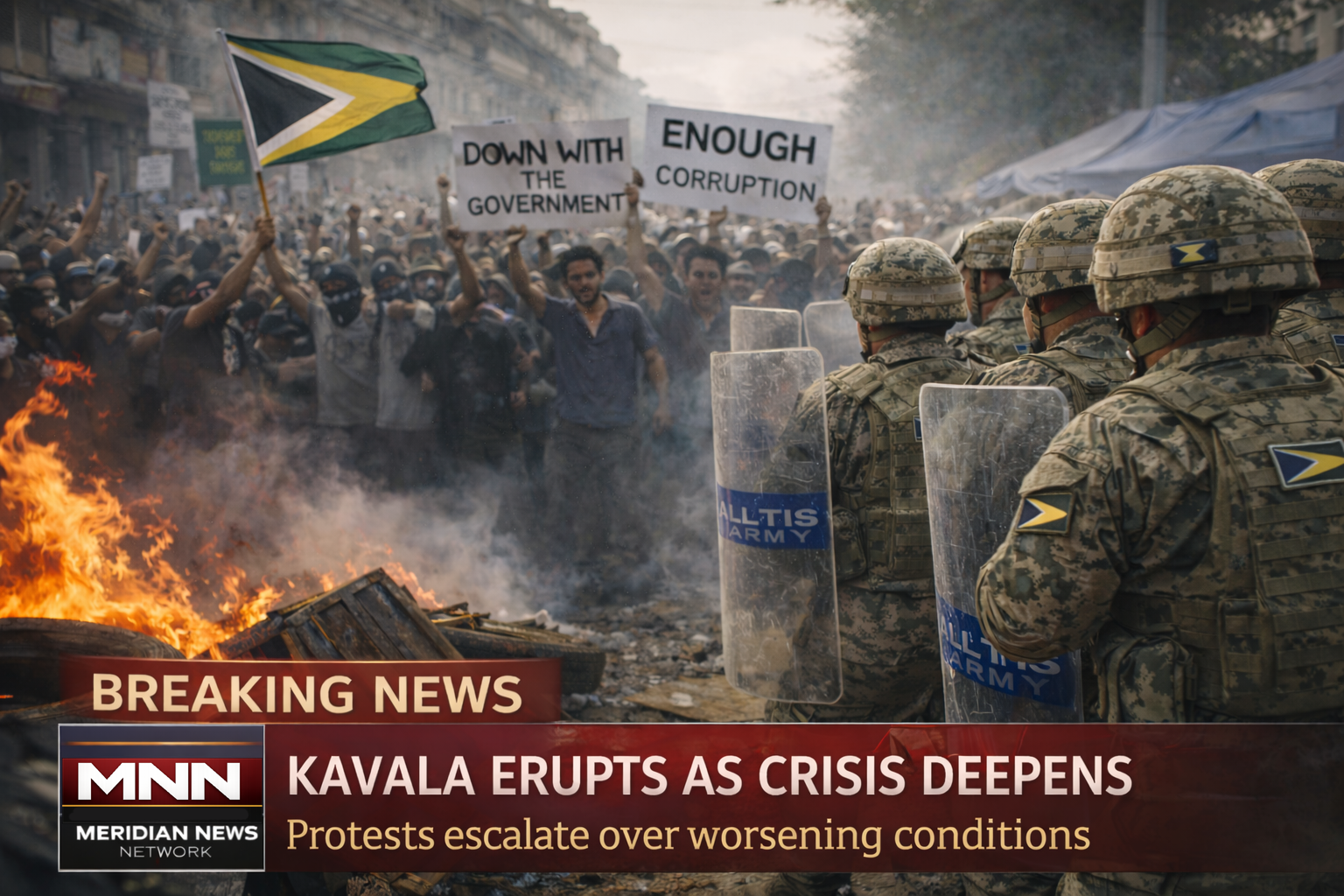
A new wave of demonstrations in Kavala underscores the continuing economic breakdown on Altis, with some marchers now appearing armed as local coverage intensifies.